
HEALTH PROTECTION RIGHTS UNDER THE MINE ACT
The health and safety of all miners are a primary concern for MSHA. This section is intended to inform you of your rights as they relate to your personal health and the health of other miners working at the mine.
PARTICIPATING IN ENFORCEMENT HEARINGS
You have the right to be informed of potential chemical hazards and the appropriate protective measures required when working at the mine site. The mine operator is responsible for developing, implementing, and maintaining a written Hazard Communication (HAZCOM) program and for making this information available to all miners. All known chemical hazards must be properly identified and documented within the HAZCOM program.
If you or another miner experiences a medical emergency, the mine operator is required to disclose any chemical information relevant to medical treatment, even if such information is considered a trade secret.
NOISE EXPOSURE
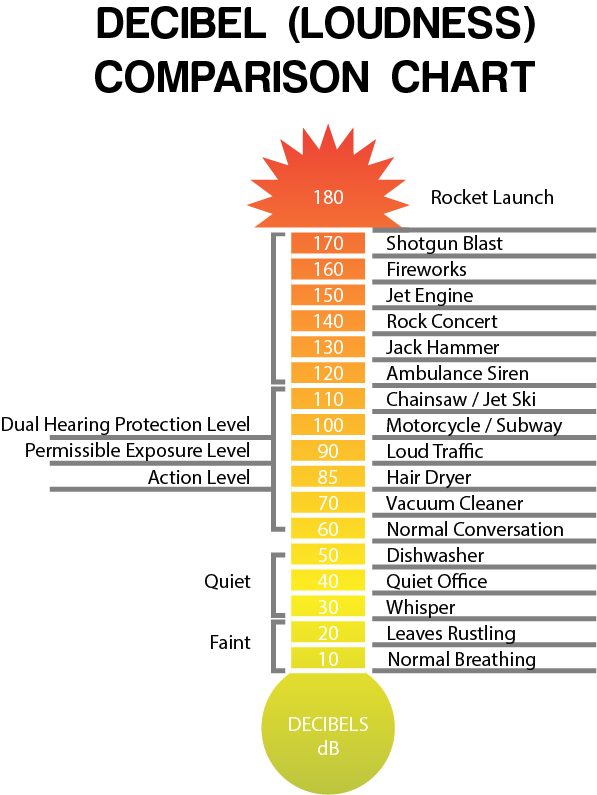
The mine operator is required to monitor and evaluate your occupational noise exposure levels. You and your designated miners’ representative have the right to receive advance notification from the operator prior to the initiation of any noise monitoring activities.
Audiometric testing must be performed by a licensed physician, a certified audiologist, or a qualified technician operating under the direct supervision of a physician.
If your measured noise exposure exceeds the established “action level,” the mine operator is required to enroll you in a hearing conservation program. MSHA defines the “action level” as an eight (8) hour time-weighted average sound exposure of 85 decibels (dBA), including sound levels ranging from 80 dBA up to at least 130 dBA.
Hearing conservation training must be completed within thirty (30) days of your enrollment in the program. Annual refresher training is required if your occupational noise exposure levels do not show a measurable decline.
The “dual hearing protection level” is defined as an eight (8) hour time-weighted average sound exposure of 105 decibels (dBA), incorporating sound levels ranging from 90 dBA up to at least 140 dBA.
When a miner’s exposure meets or exceeds this level, the mine operator is required to provide and ensure the use of dual hearing protection, such as earplugs in combination with earmuffs. All required hearing protection equipment must be provided at no cost to the miner.
Under no circumstances may a miner be exposed to noise levels greater than 115 dBA. This limit is referred to as the “permissible exposure level. ” This is known as the “permissible exposure level.” Within 15 days of discovery, the operator is required to implement measures to reduce your exposure to noise if it exceeds:
 The action noise level.
The permissible exposure level.
The dual hearing protection level.
REQUESTING TOXICITY, HAZARD, AND EQUIPMENT STUDIES
Pursuant to the Mine Act, a miners’ representative may request that MSHA or the Department of Health and Human Services (DHHS) conduct studies, research, experiments, or demonstrations to determine whether any substance or chemical present at the mine has toxic effects at its normal levels of exposure.
Physical agents and mining equipment may also be subject to research and experimental evaluation to assess the existence of hazardous conditions.
All such requests must be submitted in writing. MSHA or DHHS will notify both the miner and the mine operator of any findings or results as soon as practicable.